




























A trustworthy opinion poll requires a trustworthy method: the right questions, a sample that reflects the country’s diversity, strict data verification, and transparency about what the poll can and cannot reveal. Without these basics, no amount of promotion or visual appeal can turn a weak survey into meaningful data.

Too much of Bangladesh’s politics still focuses on history while its citizens repeatedly indicate that they are more interested in what will happen to the country in the coming years

The activities of the last few days are dissipating the election-centric uncertainty. It is also clear from the behavior and actions of the political parties that they are taking the upcoming election seriously. Each party will make the utmost effort to earn the people's mandate according to its capacity. This is the biggest positive signal.

On one side: growing inequality; on the other: a deep feeling of elite-people divide; and in the middle: optimism that the future can still be changed. When these three things come together, they create the classic soil for populism.
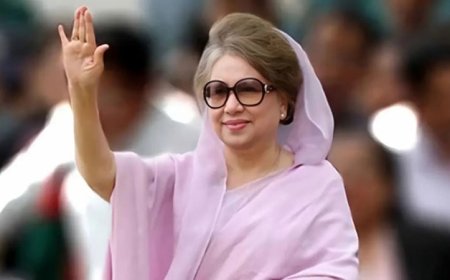
Khaleda Zia’s mixed record of democratic contribution, confrontation-driven politics and unresolved party succession continues to influence the country’s search for renewed leadership

Bangladesh’s post-Hasina politics is marked by a fierce contest between old elites and rising aspirants vying to fill newly opened power spaces. This debate is simply one front in this broader elite struggle reshaping the country’s political future.

The sooner our politics and our voters align with this demand for structural change, the sooner Bangladesh's power structure reforms will begin their sustainable journey. Mamdani's victory kindles our hope that in the near future people-oriented politics will also shine in our land.
It is unfortunate that most civil society organizations have failed to recognize that these reforms could open new pathways for them -- creating fresh opportunities to empower citizens and strengthen the accountability of state institutions, ultimately shaping their own future governance agenda.

If Tarique wishes to be prime minister and lead this nation, as his mother and father did before him, then a time comes when he needs to step up and stand up, and show the nation that he too is made of the stuff of leaders. This is such a time.

The real question is not why Tarique Rahman has not returned yet. The real question is whether the nation will stay focused on restoring democracy rather than chasing distractions.

Political life becomes a stage where guilt is assigned by association, not by evidence.

Until 2019, people in the country used to say the country was on the right track. After 2020, there has been a sharp decline. Recently, 53% of people now say the country is running well again.

In a few words of thanks, the ICT judges suggest partiality towards the prosecution side

We do not need to be perfect voters, and we do not need to know every answer. In a transitional period, what matters is the willingness to participate and the courage to relearn what authoritarianism tried to take away: that our voices count and that democracy is a skill we can rebuild together.

Neither Tarique Rahman nor Sajeeb Wazed Joy can claim moral leadership without embracing financial transparency. They owe the public answers not because they are accused men, but because they are influential men. They owe the public honesty because they seek to shape the future of Bangladesh.
The choices Bangladesh makes in the coming years will determine the future. Political experience, ideological moderation, and administrative grounding -- all characteristics associated with the centrist tradition -- will be essential components of a successful democratic transition.