






































Understanding Khaleda Zia
Khaleda Zia’s mixed record of democratic contribution, confrontation-driven politics and unresolved party succession continues to influence the country’s search for renewed leadership

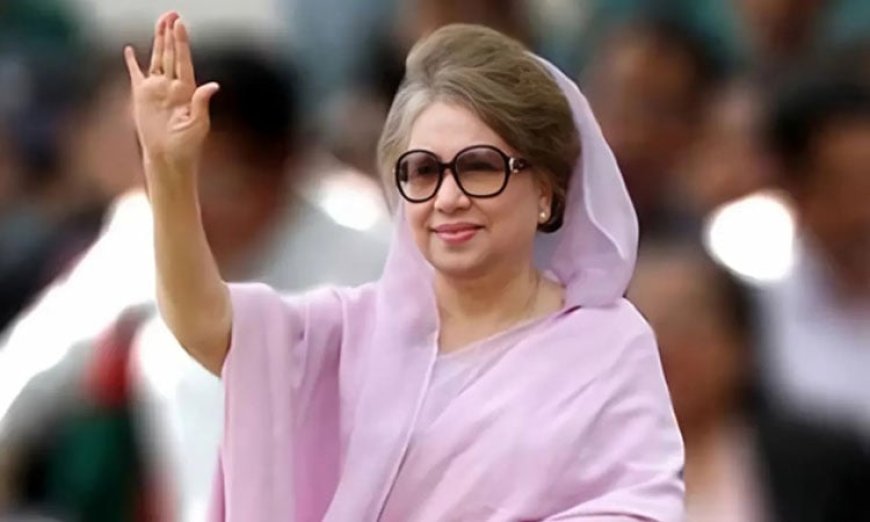
Khaleda Zia’s political journey has long occupied an unusual place in Bangladesh’s public imagination. Her story is woven into moments of national upheaval and transition, yet her presence today is shaped largely by absence.
Illness has removed her from the centre of political life, but it has not erased the imprint of the four decades in which she influenced the direction, tone and temperament of Bangladesh’s democracy.
This paradox creates a space that is neither nostalgic nor dismissive. It invites an examination of how a leader becomes a symbol, and how symbols outlast the political conditions that created them.
Khaleda Zia entered politics not by design but by the vacuum created after the assassination of Ziaur Rahman. Her rise from private life to public authority was rapid, shaped by both circumstance and a political culture that searches for inheritors during periods of shock.
What followed was a long career filled with victories, betrayals, miscalculations and fierce loyalty from her supporters. She did not carry the aura of an ideologue or the air of a philosopher. She emerged instead as a figure of accessibility at a time when the country’s political class often seemed distant.
For a large section of the population, especially outside the capital, this accessibility translated into trust. For her critics, it translated into oversimplification of complex governance demands.
The truth lies somewhere in between. Her leadership style blended instinct with caution, emotional connection with political rigidity, and personal resilience with an inability to reform the structure around her.
Her influence was not defined only by election cycles or parliamentary arithmetic. It was also shaped by the contest over the country’s political soul. Bangladesh, through most of the 1990s and the early 2000s, oscillated between the competing visions of its two major political leaders.
This rivalry framed governance not as a shared responsibility but as a zero-sum struggle. Khaleda Zia’s contribution to this dynamic is undeniable, but so is the fact that she operated within a political culture that rewarded confrontation more than compromise.
The cycles of boycotts, shutdowns and street demonstrations became the dominant grammar of politics. It is impossible to isolate her role from the broader ecosystem that encouraged such confrontations as a path to power.
Yet her tenure also contained quieter transformations. She oversaw periods of economic expansion, improvements in rural infrastructure and the strengthening of microfinance initiatives that would later draw global recognition.
These developments were rarely attributed to her alone, but they unfolded under her watch. Her governance, like that of many leaders of her era, blended progress with uneven accountability. Allegations of corruption shadowed her two terms and would later shape her political downfall.
Supporters viewed these allegations as attempts to delegitimise her influence, while critics saw them as evidence of systemic flaws within her leadership circle. The difficulty lies not in proving one side wrong and the other right, but in recognizing that public perceptions of corruption often play a more powerful role in politics than legal conclusions.
Her imprisonment and subsequent periods of ill health have pushed her far from the stage she once dominated. Yet the countrys political discourse continues to orbit around her.
Her party struggles to redefine itself without her full presence, and her opponents continue to treat her legacy as a reference point for contemporary arguments. A leader whose physical condition no longer allows active engagement remains central to the narrative.
This is not simply because of nostalgia, nor because of political strategy. It reflects a deeper truth about Bangladesh’s political memory. The country has not yet resolved its relationship with the political generation that shaped its post-authoritarian years.
In Khaleda Zia’s absence, the BNP faces challenges that go far beyond organizational weaknesses. It grapples with a vacuum of moral authority, a lack of clear ideological development and an inability to cultivate new leadership with broad national appeal.
Her son Tarique Rahman remains the unofficial axis around which the party rotates, but distance and legal challenges have limited his ability to rebuild organizational credibility.
The reliance on one family for decades has created a political structure unable to adapt to generational change. This is not a unique phenomenon in South Asian politics, but in the case of the BNP it has deepened its vulnerability.
Her critics argue that her legacy is one of missed opportunities and polarization. Her supporters argue that she embodied a necessary counterbalance in a political landscape prone to dominance by one narrative. Both positions carry partial truth.
Her political life contains episodes that deserve critique for their impact on institutional norms and democratic practices. At the same time, those critiques cannot erase the fact that she represented, for many citizens, an alternative path at a time when political choice was essential to maintaining democratic space.
The country’s political story would be incomplete without acknowledging her role in protecting the electoral framework during moments of instability, even if she also contributed to instability in others.
The current chapter of her life, marked by medical vulnerability, creates a different kind of political reflection. Her physical decline forces the nation to confront the impermanence of personalities that once seemed inseparable from power.
It also raises questions about how a country treats its former leaders. Bangladesh has a complicated history in this regard. The absence of a political culture that allows graceful exits or dignified retirements means that leaders often remain in the arena longer than their health or circumstances allow.
Khaleda Zia’s situation is a stark reminder that political systems require not only mechanisms for leadership selection but also mechanisms for meaningful withdrawal.
The country now stands at a moment of transition, not driven by any single figure but by broader shifts in governance, public expectations, demographic pressures and economic realities. Within this landscape, the relevance of Khaleda Zia’s life story becomes neither purely political nor purely personal.
It becomes a lens through which to consider the future. Her career raises questions about leadership renewal, institutional resilience and the risks of personalising political movements. Her absence raises questions about legacy and how nations carry the memories of those who shaped earlier battles.
The challenge for Bangladesh is to move beyond the habit of defining itself through rivalry. That requires an honest assessment of what Khaleda Zia contributed and what she failed to achieve. It requires acknowledging her as a complex figure whose strengths and limitations both shaped the country’s political evolution.
A neutral reading of her life reveals not a hero and not a villain, but a leader who operated within the constraints and opportunities of her time. Her story deserves neither uncritical praise nor selective condemnation. It deserves to be understood as part of the long and difficult journey of a democracy still discovering its own foundation.
Her final chapters remain unwritten, but they will not change the central truth. She was one of the pivotal figures in Bangladesh’s political formation. Whether one admires her, critiques her or feels indifferent to her legacy, the country she helped shape is still negotiating the contours of its future.
Khaleda Zia’s life invites Bangladesh to reflect on its own political habits and to consider whether it is ready to imagine a future not anchored in the narratives of the past.
H. M. Nazmul Alam is an Academic, Journalist, and Political Analyst based in Dhaka, Bangladesh. Currently he teaches at IUBAT.
What's Your Reaction?