























































Gaza, Power, and the Politics of Indifference
If Gaza becomes the example that law is conditional and morality negotiable, then the costs will be felt far beyond its borders. And when history renders its verdict, it will not be kind to those who turned away.


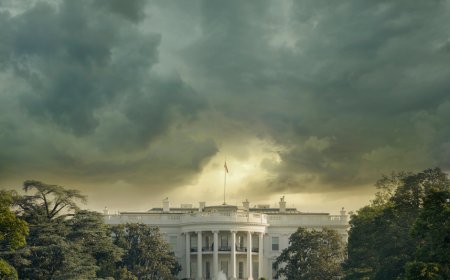
The spectacle of a moral catastrophe unfolding under the glare of global attention, met with little more than a diplomatic shrug from Washington, is as revealing as it is damning.
Israel’s newly approved plan to assume full military and administrative control of Gaza -- endorsed by Prime Minister Benjamin Netanyahu’s security cabinet -- ought to stir unease in every capital. Yet, from the White House to Foggy Bottom, the response remains tepid, almost studiously non-committal, as though atrocity could be reduced to a footnote in a larger strategic ledger.
This is not a routine extension of a long and bitter conflict; it is a calculated escalation. Netanyahu’s office has laid out a plan in five deceptively simple points: the complete disarmament of Hamas; the return of all hostages, living or dead; the total demilitarization of the Gaza Strip; the imposition of permanent Israeli security control over the territory; and the creation of an alternative civilian administration -- one neither Hamas nor the Palestinian Authority. Behind these ostensibly security-driven aims lies a far starker reality: the likelihood of mass displacement, an intensified blockade, and a military occupation in all but name.
Preparations are already under way for the Israeli army to seize Gaza City, a metropolis of hundreds of thousands, under the pretext of ensuring security while promising humanitarian relief only to those pushed beyond the designated war zone. Even within Israel, opposition to the plan is audible. Families of hostages fear the operation will kill rather than rescue their loved ones; senior military figures, including the IDF’s chief of staff, Lt. Gen. Eyal Zamir, have warned that a full occupation could be a strategic “trap” and might doom those still held by Hamas. Reports in the Israeli press quote assessments that most, if not all, surviving hostages would die -- either at the hands of their captors or through the chaos of Israel’s own military action.
The international reaction has been cautious but unmistakable. Britain’s ambassador in Tel Aviv has called the plan “a huge mistake.” Australia’s foreign minister has publicly urged Israel to abandon it, warning of an even deeper humanitarian catastrophe. At the United Nations, Assistant Secretary-General Miroslav Zenka has warned that the consequences could be “catastrophic” for millions of Palestinians. Yet the United States, historically the indispensable arbiter in the region, maintains its posture of strategic ambiguity. In the words of former Arkansas governor Mike Huckabee, it is “pretty much up to Israel.” That offhand remark has the weight of policy: the absence of any serious pressure, sanction, or conditionality amounts to an unspoken endorsement.
What makes this silence so corrosive is that it comes in the face of overwhelming evidence of human suffering. Since October 2023, over 61,000 Palestinians have been killed, according to Gaza’s Health Ministry. At least 271 have died from hunger, among them 100 children. The Integrated Food Security Phase Classification has already declared famine conditions, with half a million people starving and many more days from irreversible malnutrition. Human Rights Watch has described the deliberate restriction of food and aid as “starvation as a weapon of war,” a war crime under the Rome Statute. Save the Children warns of irreversible, generational harm: even if the fighting stopped tomorrow, the physical and cognitive damage to Gaza’s children will endure for a lifetime.
The plan’s timing and scale suggest that the calculus is not purely military. Netanyahu’s political survival depends on holding together a coalition dominated by ultra-nationalist ministers who have openly threatened to quit if there is any negotiated settlement with Hamas. For such an alliance, prolonging the war is not a failure of diplomacy but a political necessity.
Already, Israel controls about 75 percent of Gaza’s territory; the United Nations estimates that 87 percent is under either direct military control or evacuation orders. Since the collapse of the ceasefire in March, so-called “dangerous war zones” have steadily expanded, compressing civilians into smaller and more desperate enclaves.
The Prime Minister’s suggestion that Gaza might one day be handed over to “Arab forces” has the air of a diplomatic placeholder rather than a concrete proposal. No Arab state has volunteered to inherit this poisoned chalice, and none is likely to without ironclad guarantees Israel has no intention of offering. The reality is that Gaza’s future is being shaped unilaterally, under the assumption that military dominance will dictate political outcomes.
The American position, or lack thereof, is no accident. For decades, the US-Israel relationship has been an article of faith in Washington, underpinned by over $3.8 billion in annual military aid and a near-automatic veto shield in the UN Security Council. Domestic political realities -- above all, the influence of the pro-Israel lobby -- have made serious policy divergence costly. Lawmakers who question aid or strategy risk political exile. The result is a policy inertia in which strategic alliance trumps international law, and human rights concerns are muted to the point of inaudibility.
This inertia now collides with legal principles the United States once championed. The Fourth Geneva Convention prohibits the forcible transfer of civilians from occupied territory. Additional Protocol I explicitly bans the starvation of civilians as a method of warfare. These are not peripheral clauses in an obscure treaty; they are foundational to the post-war humanitarian order. If the US will not apply them to its allies, then the moral authority of those norms begins to erode.
The regional implications are equally stark. Jordan fears another destabilizing influx of Palestinian refugees that could unsettle its fragile domestic balance. Lebanon faces escalating tensions on its southern border, with Hezbollah signalling a readiness to respond. Egypt watches warily for spillover into the Sinai. Even the Red Sea, a critical artery for global trade, risks becoming another arena for proxy confrontation. Yet Washington behaves as though Gaza’s agony can be quarantined, as if its destabilizing effects will respect borders.
Perhaps the most telling indictment of the American response lies in what is not being said. There has been no explicit call to halt the displacement. No public demand for the reopening of Gaza’s crossings to humanitarian aid. No acknowledgement of the famine warnings from UN agencies. In diplomatic terms, such omissions are not oversights -- they are signals. To allies and adversaries alike, the signal is clear: the rules are flexible, depending on who breaks them.
By refusing to condemn, Washington legitimizes. By shielding Israel from consequences, it affirms the strategy. And by doing so, it sets a precedent that will be invoked by others in conflicts yet to come. Authoritarian states will point to Gaza and conclude that humanitarian law is optional if one has the right friends.
History will not measure this moment solely in body counts or in hectares of ruined urban landscape. It will measure it in the surrender of principles that once defined the international order. Silence in the face of starvation and displacement is not neutrality; it is complicity. The question is not whether Washington can see the injustice. It is whether it chooses to see -- and whether it values the alliance more than the very principles it claims to defend.
In the calculus of geo-politics, such choices have long half-lives. They shape not only the conflict at hand but the moral vocabulary of international relations for a generation. If Gaza becomes the example that law is conditional and morality negotiable, then the costs will be felt far beyond its borders. And when history renders its verdict, it will not be kind to those who turned away.
H. M. Nazmul Alam is an Academic, Journalist, and Political Analyst based in Dhaka, Bangladesh. He can be reached at nazmulalam.rijohn@gmail.com.
What's Your Reaction?